Trend Lab 4 Piece Crib Bedding Set, Bubbles Brown

Cyber Monday Trend Lab 4 Piece Crib Bedding Set, Bubbles Brown 2011 Deals

Dec 07, 2011 05:57:11

Cyber Monday Trend Lab 4 Piece Crib Bedding Set, Bubbles Brown Deals
Click for larger image and other views

Trend Lab 4 Piece Crib Bedding Set, Bubbles Brown

>> Click here to update Cyber Monday prices for Trend Lab 4 Piece Crib Bedding Set, Bubbles Brown <<

Cyber Monday Trend Lab 4 Piece Crib Bedding Set, Bubbles Brown Feature

  • 4 Piece Bubbles Brown crib bedding set
  • 35" x 45" patched coverlet can also be useful crib blanket
  • 4 separate bumpers to fit any crib
  • 100% cotton percale chocolate crib sheet with 10" deluxe pockets
  • 15" long box pleat skirt


Cyber Monday Trend Lab 4 Piece Crib Bedding Set, Bubbles Brown Overview

Geo Brown is a sixteen patch coverlet featuring floating circles print, optic squares print and two brown tones as accents. Set includes fitted 100% cotton woven light brown sheet, 15 drop flat panel box pleat skirt of solid chocolate velour with tan accent band, four seperate bumpers in cushion style, patched bumper uses all fabrics including the optic squares print and floating circles print alongside the two brown tones. Bumper has chocolate velour trim and ties.


SAVE NOW on Cyber Monday offers below!

Available In Stock.

This Cyber Monday Trend Lab 4 Piece Crib Bedding Set, Bubbles Brown ships for FREE with Super Saver Shipping.

Price : Click to Check Update Prices Please.

Trend Lab 4 Piece Crib Bedding Set, Bubbles Brown

Limited Offer Today!! Trend Lab 4 Piece Crib Bedding Set, Bubbles Brown Cyber Monday and Black Friday 2011 Deals

Comforter Covers Queen Aa Lithium Rechargeable

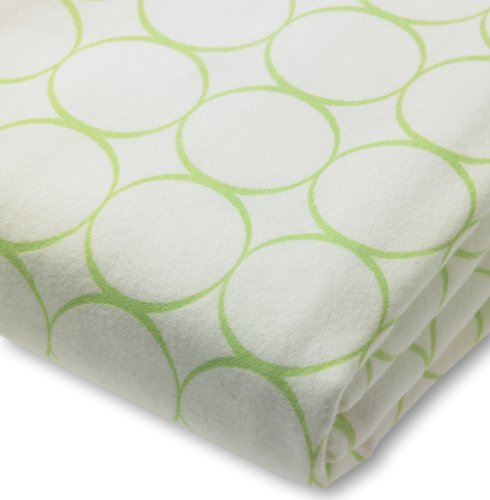
SwaddleDesigns Organic Cotton Flannel Mod Circles Fitted Crib Sheet, Kiwi

Cyber Monday SwaddleDesigns Organic Cotton Flannel Mod Circles Fitted Crib Sheet, Kiwi 2011 Deals

Dec 06, 2011 09:47:22

Cyber Monday SwaddleDesigns Organic Cotton Flannel Mod Circles Fitted Crib Sheet, Kiwi Deals
Click for larger image and other views

SwaddleDesigns Organic Cotton Flannel Mod Circles Fitted Crib Sheet, Kiwi

>> Click here to update Cyber Monday prices for SwaddleDesigns Organic Cotton Flannel Mod Circles Fitted Crib Sheet, Kiwi <<

Cyber Monday SwaddleDesigns Organic Cotton Flannel Mod Circles Fitted Crib Sheet, Kiwi Feature

  • Cozy and comfortable 100% pure cotton is gentle next to baby's delicate skin
  • Made from the same premium cotton flannel used to make the SwaddleDesigns organic ultimate receiving blanket
  • Leading safety experts encourage parents to consider a bumper-free crib for safe sleep
  • Available in an assortment of designs and colors to coordinate with any nursery or personal style
  • Sized for standard USA crib mattresses at 28 by 52" and proudly made in the USA


Cyber Monday SwaddleDesigns Organic Cotton Flannel Mod Circles Fitted Crib Sheet, Kiwi Overview

SwaddleDesigns Organic Cotton Flannel Mod Circles Fitted Crib Sheet - Kiwi

SwaddleDesigns Fitted Crib Sheets are made from 100% Certified Organic Cotton Flannel. Baby will love the comfortable pure cotton flannel next to their delicate skin. Sized for standard crib mattresses at 28 by 52" and proudly made in the USA.

Features include:

•Cozy and comfortable 100% pure cotton is gentle next to baby's delicate skin
•Made from the same premium cotton flannel used to make the SwaddleDesigns organic ultimate receiving blanket
•Leading safety experts encourage parents to consider a bumper-free crib for safe sleep
•Available in an assortment of designs and colors to coordinate with any nursery or personal style
•Sized for standard USA crib mattresses at 28 by 52" and proudly made in the USA


SAVE NOW on Cyber Monday offers below!

Available In Stock.

This Cyber Monday SwaddleDesigns Organic Cotton Flannel Mod Circles Fitted Crib Sheet, Kiwi ships for FREE with Super Saver Shipping.

Price : Click to Check Update Prices Please.

SwaddleDesigns Organic Cotton Flannel Mod Circles Fitted Crib Sheet, Kiwi

Limited Offer Today!! SwaddleDesigns Organic Cotton Flannel Mod Circles Fitted Crib Sheet, Kiwi Cyber Monday and Black Friday 2011 Deals

Digital Camera Optical

A Guide To Shopping For Dining Tables

The dining room is probably the most valued aspect in any home. Dining tables are fast becoming one of the most important pieces of furniture you will purchase for your home, whether you want to put this piece of furniture in a dining room, living room or even your kitchen. They are a piece of beauty and are quick becoming the main focal point in every home, as well as being extremely practical.

Circle Crib

Dining sets are available in a wide range of styles and sizes and they are all practical in their own right, whether you intend to use your table for entertaining guests, special occasions or for simply feeding your family at meal times. Choosing the perfect table is an important decision to make, so please browse the choice available and give this decision some thought before purchasing.

Circle Crib

Before you begin your search for dining sets, it is crucial to measure the space in the room carefully. This will ensure that you know the exact measurements of which dining table will fit best into your home. Whether you have a smaller room, or a larger space to work with, dining sets are designed in a range of sizes, which means that you are sure to find the most appropriate size dining table for your dining room or kitchen.

Next, it is worthwhile to think about what shape of table will fit into the space. There should be enough space around the table for guests or family to get in and out, which makes the shape of the table just as important as the size. The shape of dining sets can be square, rectangular, circle and even oval. You can choose the best one which will reflect the style of your home and one which will fit neatly into the size of the available space, allowing space for family and friends to move around.

Now it is advisable to think about the style and type of dining table you want for your home. Whether you are looking for a traditional dining table in wood or perhaps something more modern in metal, glass and chrome, you are sure to find the perfect dining set when browsing through the choice available online. Wooden dining options are a popular choice because they are durable and strong and able to withstand every day knocks and bumps. Traditional wooden dining options can add charm and sophistication to your home but you can also choose wooden dining sets with a more modern and contemporary feel.

If you are looking for modern dining sets for your home, then you will find that metal and glass ones will most certainly exude modern and contemporary sophistication. Metal, glass and chrome dining sets are fast becoming the dining table of choice because they can create a stunning and interesting focal point in your home. Glass dining sets are also practical to clean and look after because they are easily wiped clean with glass cleaner but you can also choose wooden dining sets where the table top is finished in a resilient finish, which can be wiped for easy cleaning.

It is also important to think about how many people you would like to have seated around the dining table. You may use your dining table for family meals, where 4 seats is an adequate number, or if you want to use your dining table to entertain guests at dinner parties, then 6 seats may be necessary. You have this seating option when choosing dining sets.

Choosing which style of dining chairs you like is just an equally important decision to make when selecting the dining table. There is an extensive collection of stylish dining chairs around these days, which includes wooden, metal and material dining chairs. You will most definitely find the perfect dining set combination to suit your style requirements. The wide range of dining sets available to buy already offers a vast choice of table tops and legs in both a traditional or contemporary style and you can choose dining chairs which will compliment the dining table. Dining chairs can be upholstered in various colours of stylish faux leather, and you can even choose matching upholstered material chairs which come in really stylish patterns and designs. These sets will certainly attract wanted attention from your guests.

If you are looking for a new dining table and chairs, then make sure to have a look at the traditional and contemporary styles available. You are sure to find a great range of Dining Tables and Dining Chairs to suit every style and budget.

A Guide To Shopping For Dining Tables
Circle Crib

35Mm Dx Nikon Twin Mattress Firm Gopro Hero Hd

The Chinese Roots of New Thought - Confucius, Chu Hsi and Ernest Holmes

"Before there was a Heaven and an Earth there was, in the final analysis, only li ("principle")...There being li ("principle") then there was ch'i ("energy") and its flowing, traveling, and creative acts..."

Circle Crib

Chu Hsi (1130-1200), Commentaries

Circle Crib

"Bow deeply three times," my father instructed my 8-year-old brother and me many years ago. "When your turn comes, you both take five steps forward to the table in front, and honor your ancestors by bowing."

"I don't see any ancestors..." I said. I had about as much interest in this ritual as I had in jumping off a cliff. "It seems so stupid that everyone has to bow before these candles and incense!"

"They are joss sticks, and they are to honor your ancestors," my father corrected. "First Grandpa and Grandma will go and bow, and then your uncles, your mother and I, and then the grandchildren - you and your brother." My father, usually an amiable person, directed us in a voice that would brook no argument.

Harmony in the Chu family prevailed. When our turn came, my brother and I went up there without a fuss and bowed three times. We did it every Chinese New Year for many years, until both my grandparents had made their transitions.

Little did I know then that 50 years later I would regard my upbringing, ancestor veneration and all, with loving appreciation; that I would revisit memories of such rituals with great curiosity; or that I would discover strong Confucian and Taoist influences in my family traditions and values.

Nor did I anticipate my most recent discovery, that a 12th-Century Chinese sage named Chu Hsi was one of the Asian forefathers of 20th-Century New Thought.

I found Chu Hsi while doing research for a book. I also came across something else -- surprising and exciting -- that left me no doubt that I had been divinely guided to my discoveries. More on that surprise later.

Chinese "New Thought"

In the 12th Century, a Confucian sage named Chu Hsi (also: Zhu Xi) developed what 20th-Century scholars have termed Neo-Confucianism, which was a very significant addition to Confucius' original teachings recorded in 5th-Century B.C.E.

In his writings, Chu Hsi incorporated and synthesized ideas from several venerable sources: the writings of Confucius; key metaphysical concepts found in the I Ching; the cosmology and spirituality in Taoist texts; and (to a lesser degree) the tenets of Buddhism.

Today, what we call "Confucianism" is actually Chu Hsi's Neo-Confucianism. Few Westerners realize that the ideas they attribute to Confucius actually belonged to Chu Hsi.

Although they lived more than seven centuries apart, remarkable similarities exist between Chu Hsi and Ernest Holmes, the founder of Religious Science - not only in the development of their ideas and their conclusions, but in their interests and personalities, too.

Both were outspoken. Both were iconoclasts. Both were well-versed in the philosophy and spirituality of their respective times. Both saw beyond the material world of effect into the principle of Spirit unfolding through every life. And both explored and synthesized ideas from many traditions, creating a rich integration of metaphysics, spirituality and philosophy.

Confucian teachings, and then Neo-Confucian ideas, became the basis of Chinese culture, its civil service, and many of its important family rituals. Confucius saw the individual as an integral part of his or her family, village, province, country and world; he taught that each person had a responsibility to lead a virtuous and moral life, one based on respect for filial piety. Each person bore a societal responsibility to become "the superior man" through introspection, diligent study, and observation.

Chu Hsi stressed the creative nature of Spirit rather than the stillness of the Infinite elevated in Taoist and Buddhist teachings. Chu Hsi saw the great Creator as principle.

Infinity was described by the Chinese term "taiji" or "grand ultimate." The concept of taiji first appears in the I Ching, the ancient philosophical text also known as The Book of Changes. Taiji, in Chinese philosophy, describes the eternal source and union of the two primary aspects of the cosmos, yang (active) and yin (passive).

In New Thought, these primary aspects are equivalent to two states of Mind: conscious (active) and subconscious (passive) Mind.

Like Religious Scientists, Neo-Confucianists did not believe in heaven and hell in the Christian sense; instead, they thought in terms of tien li (heaven mind) and shr li (earth mind) -- both states of consciousness. Chu Hsi believed in an impersonal God made personal by its indwelling presence or principle in each person or class of creation.

The Neo-Confucian philosophers of the Sung dynasty (960-1279) further expanded that idea by associating taiji with li ("principle"), the supreme rational principle of the universe, the originating principle of the grand ultimate. Li is Mind, but it is also Law. In New Thought terms, Li (Cause) engenders ch'i ("vital matter" or the Effect), which is transformed through the yang and yin modes of development into the Five Elements (wood, earth, fire, metal, and water). Chinese cosmology sees these as the primary constituents of the physical universe.

Contrast this with what Ernest Holmes, seven centuries later, wrote in The Anatomy of Healing Prayer: "...we are not only surrounded by divine Presence, which responds to us as Person -- we are surrounded by a universal Principle, which responds to us as Law..."

Legacy of the Three Great Traditions

The 5th and 6th centuries B.C.E. produced China's three greatest philosophers: Confucius, Lao Tzu, and the Buddha. Noting the importance of these centuries in Chinese thought, some historians compare 5th- and 6th-Century China with ancient Greece.

Chinese philosophy, especially Taoism, Confucianism and the metaphysics of the I Ching, were not always separate and distinct schools, but rather complementary at times. Confucianism incorporated key concepts of Taoism and the I Ching. Neo-Confucian-era paintings depict Confucius, Buddha and Lao Tzu drinking from the same vinegar jar and declare: "The three teachings are one!"

Ernest Holmes studied the three great philosophical and spiritual traditions of China: Buddhism, Taoism and Confucianism, so it is perhaps not surprising that Science of Mind incorporates Eastern ideas. The works of Thomas Troward and Ralph Waldo Emerson reflected Eastern thought. The works of Confucius and Chu Hsi also influenced such luminaries as Wilhelm Reich and Swedenborg. Holmes certainly studied Confucius' concepts of the principle of harmony and the practice of humaneness (ren), or agape, highly valued in Buddhism and Taoism, and the common themes of oneness with Source, the illusion of the material world, and the power and responsible use of positive thought.

Holmes undoubtedly saw the Hindu roots of Buddha's teachings as well, and reflections of both in Emerson's essays, which describe the "illusion of the material world, and the great 'Oversoul.'" The Tao te Ching also may have influenced Holmes with its wisdom of opposites and the relationship between the Tao and each individual.

Neo-Confucianism has been heavily influenced by Taoist philosophy, which emphasized introspection but encouraged its followers to observe the unfolding of perfection and enlightenment through nature. True wisdom could be seen in contrasts of opposites: learning without speaking; action through non-action; and becoming more by doing less. The ultimate Oneness with Spirit was experienced in the great stillness, the sum of all creation in the great emptiness devoid of the illusion of the material world.

History suggests that a young Confucius met the old sage Lao Tzu and shared this with his students:

I know how birds can fly, fishes swim, and animals run. But the runner may be snared, the swimmer hooked, and the flyer shot by the arrow. But there is the dragon: I cannot tell how he mounts on the wind through the clouds, and rises to heaven. Today I have seen Lao-tzu, and can only compare him to the dragon.


Chu Hsi's Emergence

For more than a thousand years, the study of Confucianism was known as "daosye" or "the way" (not to be confused with the way of Taoism). While much of Chinese philosophy had been studied and translated by the Jesuits and others, Chu Hsi's writings were not widely translated by Western scholars until well after Holmes' 1926 edition of the Science of Mind textbook was written.

Even today, while Chu Hsi is revered in China as one of its greatest Confucian sages, he is little known in the West. Chu Hsi was born in the mountainous province of Fujian in southern China. He was the son of a minor government official who had incurred the wrath of the emperor by opposing the tribute settlement with the warring Jurchens. The Song emperors bartered nearly 150 years of peace by agreeing to pay tribute to the Jurchens. During that period, there was a resurgence of philosophy as well as invention of gunpowder-propelled rockets; the first moveable type printing press; the compass; and the establishment of naval power through advances in shipbuilding.

As a child, Chu Hsi proved to be precocious in the study of classics; he passed the civil service exam with high marks at a very young age. An iconoclast, he was outspoken about the corruption of local officials, which relegated him to working in local temples rather than in higher government positions that he might otherwise have held. Losses sustained by China in earlier wars led Chinese philosophers such as Chu Hsi to question the moral strength of China's leaders and to begin to reinterpret traditional Confucianism.

Open at the Top

Confucianism has evolved because it was open at the top, although much of this been a result of historical circumstances and political changes.

Historically, Confucianism, a term coined by the Jesuits in the 1500s, was born during the period that historians call "Summer and Autumn Period" of the Zhou Dynasty (700 BC-240 BC) - a feudal society governed by a relatively weak emperor and a large network of princes, dukes, relatives of the Zhou emperor, and allies. The hundreds of fiefdoms made for constant war, bickering and schemes to consolidate power. The larger fiefdoms became states, and the stronger states annexed or conquered smaller ones. Alliances were made and lost, and the strongest states even declared independence against the Emperor. Eventually, the strongest states fought against each other, and the feudal system splintered, opening the way for a new dynasty and philosophy that would unite the Chinese culture.

This was the world that Confucius inhabited when he postulated a system of harmonious, moral society that valued loyalty, filial piety, acceptance of and responsibility for one's class in life, and the practice of humaneness (agape) and virtue from top to bottom. Confucianism, which stressed harmony, respect and honor, was anchored in rituals, especially at the family level.

Although Confucianism was reinterpreted every five or six hundred years by Chinese scholars, the impact of Chu Hsi's Neo-Confucianism was enormous. Neo-Confucian philosophy became the basis of China's civil service exam system, the first world's first meritocracy; and of a harmonious and virtuous societal order with a Taoist-influenced spiritual cosmology. Life magazine's 1998 special edition of The 100 Most Important People and Events in the Past 1000 Years included Chu Hsi, the father of Neo-Confucianism, in the top 50.

While Chu Hsi is given credit for the development of Neo-Confucianism, there were others who contributed to the synthesis of Confucian thought. Another competing school of Neo Confucian thought was presented by the great Mind philosopher, poet, and general, Wang Yangming (1472-21529), who equated mind with li, but taught that self- cultivation was based on intuitive knowing vs. investigation and diligent study.

In the 20th Century, amidst political and economic upheavals and wars in East Asia, New Confucianism was born. This latest revision of 2,500-year-old ideas incorporates not only Neo-Confucianist teachings but Western ideas. Like its predecessors, New Confucianism is partly a product of the politics and times of the China in which it arose.

Self-Reflection and Study

The Neo-Confucianists' concept of self-introspection was equivalent to Religious Scientists' experience of a spiritual journey. Confucian family rituals such as ancestor veneration served as reminders of the wisdom, love and support of the Great Ultimate; Religious Scientists participate in the ritual of Sunday services intended to remind them of the wisdom, love and support that indwells them. Heaven mind, seen in the study of nature, is a Taoist concept evident in Emerson's observation that "nature always wears the colors of Spirit." For Chu Hsi, developing the consciousness of heaven mind was not enough. True to his Confucian roots, he taught the importance of putting consciousness into action within the context of the greater good of society.

These qualities of the "superior man" were attained by diligent study -- reading and memorizing the writings of Confucius, which have come to be known as The Analects of Confucius, The Confucian Canons (4 books), The Book of Rites, and the I Ching or Book of Changes. Neo-Confucian classics were revised but included The Analects of Confucius, which were directly recorded quotes from him; The Great Learning, extracted from The Book of Rites, which is an authoritative work on the process of self- cultivation; and The Doctrine of the Mean, another chapter from The Book of Rites, which enumerated important elements of metaphysical psychological theory and sagehood. A fourth book was the Works of Meng Tzu or Mencius (circa 200 B.C.E.), the first great Confucian scholar to reinterpret and enrich Confucianism. From the superior man came the path of true wisdom, or the path of the sage.

Neo-Confucianism and Asian Culture

Similar to the original development of Confucianism, Neo-Confucian philosophy came out of an era where the Song emperors were warring against fierce invading Jurchen tribesman, descendants of the Tartars of central Asia. With more than 100 years constantly at war with the hostile Jurchens, the Song emperors in 1127 abandoned the ancient northern capital at Kaifeng and settled in Hongzhou in the south, in an area roughly smaller than Eastern Europe.

Eventually, in 1279, all of China would fall to another invading tribe from Mongolia led by Genghis Khan, but even the "barbaric" Mongols and the Manchus from Manchuria who founded the Ching Dynasty in the 17th Century adapted Neo-Confucianism as a guideline for governing.

Neo-Confucianism also was adapted in the Tokagowa Shogunate (1603-1868) in feudal Japan and heavily influenced the samurai moral code of bushido, which stressed loyalty, morality, honor and responsibility. Since neighboring countries such as Japan and Korea were governed primarily through monarchies or dictatorships, Confucianism as first developed envisioned a system to create harmony and peace throughout the country, in local areas, within families and within the self, and subsequently as a system to bring stability to society. Current-day Confucianism or Neo-Confucianism in its entirety was embraced by Korea in the 1300s, and it remains an important part of both North and South Korean culture.

Aspects of Neo-Confucianism are strongly instilled in the Chinese and Asian culture today. For example, Confucius stressed the concept of guanshi, which carries the notion of "good will" and "relationship." To the Western mind, friendship and relationship may hold value on a personal basis, but not necessarily in business, where another set of standards seem to apply. Western companies choosing to do business in China have learned the hard way about the necessity of cultivating relationships; the importance of face; and working through channels - all part of the original Confucian philosophy.

Coming Full Circle

Westerners might have some difficulty understanding why businessmen or the merchant class were at the bottom of the Confucian social order, below farmers and laborers. It was primarily because merchants made a profit at the expense of others, without concern for the greater good. There is much that we in the West can take away from the great Neo- Confucian philosophy in our own business practices and the focus on material outer wealth at any cost. Our economic system has led to individuals and corporations who narrowly focus on profit and stockholder interests without looking at the greater costs to society or to the environment.

The U.S. Congress has attempted to legislate corporate morality through Sarbanes Oxley and the Foreign Corrupt Practices Act, while at the same time being heavily influenced by the lobbying of the very corporate interests they regulate. What is needed is a vision of connection, global sustainability of resources, and cooperation that transcends more narrowly focused individual interests. To paraphrase Confucian wisdom: "Where we offer humaneness to others, we fill the world with harmony, prosperity and peace."

Given the major changes in China, especially those that have brought economic and social progress, it is possible that New Thought, whose roots in Eastern spirituality were shaped by Western transcendalism, can enrich the long continuum of Confucianism. Confucianism has emphasized virtue, principal and societal harmony, while New Thought has emphasized Spirit expressing through universal laws by means of us. Seven hundred years later, Neo-Confucianism and New Thought arrive in the same place.

Finally, I mentioned near the beginning that I would reveal the greatest surprise of my research. Despite having more than a billion people, China has only 100 family clans. The English spelling of the names of these clans can vary widely. For example, Chu can be spelled Zhu, Chiu, Gee, Ju and other ways. Chu is the 14th most common name in China. The Chinese character for the Chu clan is "vermillion." During my research for my new book, I established that Chu Hsi is a member of the Chu clan, as are the founding emperors of the Ming Dynasty, which adopted Neo-Confucianism as the state philosophy.

A large number of the Chus come from Anhui and Jiangsu provinces in southern China, where Chu Hsi's family lived before his father was exiled. This area is also near my family's ancestoral home. So I was led to wonder: When I was bowing to my ancestors every Chinese New Year, was I bowing to Chu Hsi?

I have realized anew the truth in the saying, "What you resist, persists." Little did I know when I resisted our family ancestor veneration ritual that, 50 years later, as a Religious Science minister, I would have a special appreciation of indeed of what it is like to stand on the shoulders of my ancestors.

Rev. Ernest D. Chu is an ordained assistant minister at Religious Science Ft. Lauderdale. He is the author of the forthcoming book, Soul Currency: Investing Your Inner Wealth for Fulfillment and Abundance, to be published by New World Library in mid-2008. A graduate of Amherst College with a degree in History and Asian Studies, he was a graduate scholar and Moore Fellow at Columbia University's Ph.D. program at the East Asian Institute. He has had a rich career as a staff writer for The Wall Street Journal, an investment banking and venture capital executive, and founding member of nine startup companies, three of which went public. A member of the Board of the National Committee on American Foreign Policy, he led of one of its first delegations to China, where he was greeted by an uncle, then-Vice Foreign minister Zhang Wen-jin, who was one of the architects of normalization between China and the U.S.

Every Chinese New Year, our family would visit my paternal grandfather. After a six-course Chinese meal, we lit incense and joss sticks for the family ritual of honoring ancestors by bowing three times reverently in front of a special table. Grandpa called it ancestor worship. Today I know it to be "ancestor veneration," but at the time it seemed almost sacrilegious

The Chinese Roots of New Thought - Confucius, Chu Hsi and Ernest Holmes
Circle Crib

Wooden Towel Stands Sealy Posturepedic Full Size Mattress

Day Care Center - Setting Up the Classroom

Daycare licensees and administrators must give special attention to preschool day care classroom layout before the beginning of each school year. The preschool classroom is the child's first introduction to the world of education hence making a layout that will be attractive and enjoyable to the child will be very important. A good classroom layout could make the child's introduction to education a fun learning experience or a nightmare that could have a lasting negative effect.

Circle Crib

A good first impression of the school's layout could help develop in a child a set of positive feelings and associations that will help carry them through in a lifetime of learning. In addition, the classroom must provide a worthwhile learning and playing experience that will help prevent a separation anxiety disorder on the children as they were left on the daycare center by their parents.

Circle Crib

One fact that daycare licensees and administrators must always consider is that preschoolers are very active - they are always moving - so having a chaotic environment is always a possibility. Planning the classroom layout to prevent this chaotic environment is both a challenge and a necessity if they want to keep the interest of the children and at the same time guarantee their safety.

Child-sizing the Classroom
The common mistake of classroom designers is to make the layout from the point of view and the spatial requirements of an adult. While everything must not be scaled down to pint-size such as ceiling height and window sizes, almost everything in the classroom must be designed to the size of the children who will inhabit the area. Children will be very much uncomfortable and uneasy if the furniture in the classroom, as well as other amenities, will be adult-sized. It will also be quite dangerous for them trying to climb oversized chairs or getting something from adult-sized shelves.

Planning the classroom layout will require that the person who will do the design it must kneel in order to look at things on a child's eye level. This will definitely change the planner's concept of things to be incorporated into the classroom. The planner will be able to envision the right size of the chairs, tables, shelves, and everything that will be needed inside a preschool classroom.

Planning a preschool classroom will also need a clear understanding of space from the point of view of a child. While the distance from a table to the nearest toy shelf may be a few steps away when an adult is involved, the planner has to understand that it will require much more steps for the child. Arrangement of furniture must therefore be done from the perspective of a child and not that of an adult.

A tricky part in designing the classroom using a child's perspective and size is how it will affect the teacher and other staff of the daycare center. While furniture arrangement will suit the needs of the children, the planner has to consider also that the teacher and other staff have to be moving around the classroom. If the staff will be moving around in the classroom whose furniture are designed for the size of the children, they could trip over some tables or chairs as they move about. There is a need to strike a balance between the needs of the children and the need of the staff especially on matters that involve spatial arrangement of things.

Classroom Division
The classroom must be divided into the necessary sections as the various needs demand. Normally, a preschool classroom will need areas for art, blocks, manipulative activities, dramatic play, music, library, and science. There will be instances also that will require a writing area, usually close to the library section. An indoor playground could also be incorporated into the preschool classroom. The layout planner must see to it that an area is devoted for each of these purposes and that related activities must be placed close or near each other. For example, the play area must be adjacent or very close to the shelves where toys are kept.

Classroom division need not be uniform in size as different activities may require varied space requirements. Dramatic play areas are expected to be bigger in size than music area. Also, some kind of classroom activities may be noisier than others hence it will be necessary that these are assigned areas quite far from the area that will be assigned to quiet activities like the reading area. The music area must not be put very close to the dramatic area as the sound will interfere with the activities being undertaken in the dramatic area. Art and reading areas must be assigned to the quieter side of the classroom as these will need a lot of concentration on the part of the children and any noise or music could ruin their concentration.

It is important to clearly mark the boundaries of the different areas of the classroom. Divisions could be in the form of shelves or by putting color duct tape on the floor in order to delineate assigned activity areas.

The center of the classroom must be cleared of any furniture or large objects so it can be utilized as an assembly area of the students every time there is a need for them to be gathered together for an activity such as story-telling or show-and-tell. This area is also where students can form into a large circle when they need to be interacting with each other.

The walls of the preschool classroom may be utilized for different purposes such as decoration, show area of the children's work, bulletin board, charts, and an attendance board with the pictures of each child enrolled in the particular class.

Sections of the classroom must be clearly identified usually by hanging signs that will show which area is to be used for a particular purpose. The children may not be able to read yet but they can be trained to recognize signs that will lead them to section where they must go for a particular activity.

It will indeed require a lot of creativity and imagination to make a layout of a preschool classroom but seeing the children enjoy and have fun will be worth all the efforts.

Day Care Center - Setting Up the Classroom
Circle Crib

Cocktail Storage Ottoman Collapsible Toy Box Glass Shelving Brackets

Trend Lab Dr. Seuss 4 Piece Crib Bedding Set, Oh! the Places You'll Go! Pink

Cyber Monday Trend Lab Dr. Seuss 4 Piece Crib Bedding Set, Oh! the Places You'll Go! Pink 2011 Deals

Dec 03, 2011 21:02:07

Cyber Monday Trend Lab Dr. Seuss 4 Piece Crib Bedding Set, Oh! the Places You'll Go! Pink Deals
Click for larger image and other views

Trend Lab Dr. Seuss 4 Piece Crib Bedding Set, Oh! the Places You'll Go! Pink

>> Click here to update Cyber Monday prices for Trend Lab Dr. Seuss 4 Piece Crib Bedding Set, Oh! the Places You'll Go! Pink <<

Cyber Monday Trend Lab Dr. Seuss 4 Piece Crib Bedding Set, Oh! the Places You'll Go! Pink Feature

  • Set includes quilt, fitted sheet, skirt, 4-piece bumper
  • Quilt measures 35" x 45"
  • Crib skirt has 10" drop
  • Crib sheet has 10" deep pockets
  • Coordinates with Dr Seuss pink oh! the places you'll go! collection


Cyber Monday Trend Lab Dr. Seuss 4 Piece Crib Bedding Set, Oh! the Places You'll Go! Pink Overview

"Oh the places your little one will go! The inspirational Dr. Seuss book, Oh! the Places You'll Go! is beautifully brought to life with this 4 Piece Crib Bedding Set by Trend Lab. Wonderful embroidery is set against a beautiful mix of prints in a charming dot, bold stripe and cute swirl. Trend Lab succeeds in combining Dr. Seuss' charm with beautiful embroidery, multiple textures and wonderful patchwork, providing your baby with a stylish and nostalgic nursery everyone will enjoy. Set includes quilt, 4 pc bumper, crib sheet and skirt. The quilt measures 35" x 45" and features a beautifully embroidered appliqué and the phrase Oh! the Places You'll Go! which are set against patches of soft pink velour and printed cotton. A charming dot, bold stripe and cute swirl print are featured in bubblegum, hot pink, lilac, apricot and soft yellow creating the perfect blend of color and style for your baby. Quilt is finished off with a hot pink ruffle trim. Four piece bumper set features patches of the swirl, dot and stripe prints as well as solid pink velour. Pink piping and ties add the finishing touch. Bumper consists of two long and two short pieces and measures 10" tall. Crib sheet's dot print matches the quilt and bumper. Sheet features 10" deep pockets and elastic around the entire opening for a secure fit. Box pleat skirt with 15" drop features a bold tonal pink stripe complemented by bubblegum, apricot and hot pink ruffles across the bottom. Complete your nursery with coordinating room accessories from the Dr. Seuss Pink Oh! the Places You'll Go! collection. Product sold under license from Dr. Seuss Enterprises, L.P."


SAVE NOW on Cyber Monday offers below!

Available In Stock.

This Cyber Monday Trend Lab Dr. Seuss 4 Piece Crib Bedding Set, Oh! the Places You'll Go! Pink ships for FREE with Super Saver Shipping.

Price : Click to Check Update Prices Please.

Trend Lab Dr. Seuss 4 Piece Crib Bedding Set, Oh! the Places You'll Go! Pink

Limited Offer Today!! Trend Lab Dr. Seuss 4 Piece Crib Bedding Set, Oh! the Places You'll Go! Pink Cyber Monday and Black Friday 2011 Deals

Tall Camera Tripods 12.1 Mp Digital Camera

The Truth Shall Set You Free

In almost every city in the world there is a building dedicated to a religion or philosophy that promises to free the human soul from the gates of hell. Hell can be considered anything from miserable way of living, to purgatory where the soul is tried, or to a place where souls go to burn forever after death. All of these religions and philosophies have one thing in common; they keep the "secret teachings," the ones that connect us with God and give us freedom on earth now, for the insiders. One has to be truly dedicated to learn the mystical teachings of many of these religions and philosophies. One must prove that they are diligent and loyal to the hierarchy of the institution. Only then do they receive what I call the pure light. (This is neither right or wrong it just is, in many cases.) The pure light is the part of a religion that leads one beyond all of the readings, actions, and rituals to union with God and clarity about one´s life in the world.

Circle Crib

Most religions and philosophies begin as mystical religions. They start with one person who has found a path that leads to life. This person begins to teach others. After the person is gone for one or two generations their disciples continue to teach the authentic way to connect with God. Something happens after that: it becomes an institution. The institution has to sustain itself. It has to fit in in the larger society and be respected. The teachings are watered down as the religion degenerates aligning itself with a corrupt, innate, power over system. It becomes useless; its teachings become defuse light instead of the real pure light. Adhering to such religions make the seeker feel that there is nothing more than empty ritual, and a good feeling that happens every so often for a few moments and then dissipates, or that there is nothing. People give up on the idea of connecting with God.

Circle Crib

Some people feel that they are connected with God. They feel that their ego driven actions are sanctioned by God, since they consider God their best friend. They manipulate themselves and trick themselves into committing atrocities. This time it is done in the name of God, instead of in the name of themselves and personal gain. A war in the name of God or in the name of gold has the same effect. People being tortured, shot, stabbed and raped feel the same way if they are being abused for God or gold. People who drop their humanity to torture, shoot, stab and rape others are also just as vile and will never recover there innocence whether it is for God or Gold. Easy prayers for forgiveness don´t work. It is love that the universe is seeking. It is love that that which we call God is seeking-a loving kind heart not a bended knee, prayer, or sorrow. For it is said that the only thing that will burn in the fires of hell is greed, anger, and fear.

All of this occurs because our religious leaders don´t know what they are doing. Many of them have never had a mystical experience and don´t even believe that it is possible. This is the problem. They speak forth and shine the light for us but it is dim. It is useless. We cannot see by it. The only way, therefor, that we can enter into the heart of a religion and learn how to be one with God is by exploring religions ourselves. We can become whole by exploring the teachings of the mystics and by looking at the holy texts in various religions at a deeper level. When we see these texts as metaphors about the behavior of humanity and the inner workings of ourselves and our minds, we will have life. If not we will be religious dutifully.

The first step to this journey into the heart of God is to know that your religion has most likely been corrupted. All religions have not, but many have. Any religion that has demanded others to take up the sword more than once-all of the time, in fact, is not a religion that necessarily believes in love as its central teaching. It is not necessary to believe in love as a central teaching. Many people live great moral lives as a result of following religions, but they never attain the Kingdom of Heaven, the Divine mind, Satcittananda, or whatever we may call the power to live in peace and victory in this world and the world to come. The first step, therefor, is to realize that something is wrong if people representing your religion are speaking out to advocate for war and not to advocate for relieving poverty and bringing about justice. There is a problem.

The second step is to realize that your religion may not be the only one that is right. It is to realize that there are many ways, many faces, and names for God. It is the human heart, the kind heart, plus the call of the Divine that leads us to unity, not one´s religion. If the religion that you follow has ever killed people who questioned or perceived things a different way, it is likely that the power people, the one´s who already ran society, are the ones who established your religion to stay in power. Still, at the center of the religion, there is a path to truth. It is only the mystic path.

One walks on the mystic path through contemplative prayer and meditation. One must empty his or her self in order to be filled with the divine presence. This is done by sitting before the Divine and being still. This is Sat Yoga, the yoga of being. If one cannot come to a place where he is just being, he cannot commune with God. He cannot return back from the source from which he came. That source is the Divine by many names. If your religion does not teach you about this type of meditation or prayer, it is because the leaders don´t know about it. It is up to you to seek out such meditation and prayer wherever you can find it if this is the case, or to delve deeply into the mystical tradition of your own religion until you become one with God. In almost every religion there is a mystic path. Unfortunately, in this troubled world, you cannot wait for anyone to show you the way any longer. You have to find it with yourself, or find a small group of serious seekers who will find it with you. Seek and you shall find, my friends, for as the Sufi Mystic Hafiz once said, "It is our destiny to turned into light." You don´t have to wait for this to happen. Find a true spiritual community and you can do it now.

The Truth Shall Set You Free
Circle Crib

Cyber Monday Kushies Fitted Crib Sheet Flannel - Distressed Circles - Green 2011 Deals

Dec 03, 2011 00:53:16

Cyber Monday Kushies Fitted Crib Sheet Flannel - Distressed Circles - Green Deals
Click for larger image and other views

Kushies Fitted Crib Sheet Flannel - Distressed Circles - Green

>> Click here to update Cyber Monday prices for Kushies Fitted Crib Sheet Flannel - Distressed Circles - Green <<


Cyber Monday Kushies Fitted Crib Sheet Flannel - Distressed Circles - Green Overview

Kushies Fitted Crib Sheet FlannelThese premium quality 100 cotton flannel sheets from Kushies are availablein adorable pre-assortedboygirl and neutralcolors and prints tomatch any nursery!All fitted sheets are fully elasticized for a perfect fit.Finished edges for quality & durability.Sized to allow for shrinkage - fits perfectly after each washSizing 28 x 52 71cm x 132cmThanks Mama offers a wide variety ofcloth diaperscloth diaper covers andbaby carriers.


SAVE NOW on Cyber Monday offers below!

Available In Stock.

This Cyber Monday Kushies Fitted Crib Sheet Flannel - Distressed Circles - Green ships for FREE with Super Saver Shipping.

Price : Click to Check Update Prices Please.

Kushies Fitted Crib Sheet Flannel - Distressed Circles - Green

Limited Offer Today!! Kushies Fitted Crib Sheet Flannel - Distressed Circles - Green Cyber Monday and Black Friday 2011 Deals

Canon Image Stabilizer